User experience (UX) design is a relatively new field and only came around with the mass adoption of computers and digital technology. It has evolved over the years and is now an essential part of the digital product development cycle. The core mission of UX is to craft digital experiences that not only empower, but also delight users. In this digital era, innovation never stops and with it more and more opportunities for creating user experiences arise.
The question is how does one get into UX design. Is knowledge of coding essential? Or a degree in design? In reality it doesn’t matter, anyone with a keen eye for detail and a passion to make things better can be a UX designer.
But what is UX? UX is both the end result experience a product offers and a set of methods with which to craft experiences. These methods include various user research techniques, crafting user-flows, layout design, and user testing.
In this article I will give a brief overview of a few concepts that will help define the needs of the users, how to work with and adapt to constraints, what it means to create a story that shapes the experience, the innovation aspect of UX and that good UX comes from a lot of testing and being open to input.
Seeing Through the Users’ Eyes
The most important aspect of UX design is to learn that the ways users interact with a product and the experiences they have with it vary wildly depending on their backgrounds and life situations. In order to create a pleasing user experience considerations of the users age, background, physical location, interests, and of course comfort level with technology, need to be considered and designed around.
You’re designing to serve the needs of your users. When a user interacts with a system, they have a particular goal they are trying to accomplish, as a UX designer you need to create your features in such a way that would help users reach their goals with the product. However, finding the bridge between users needs and business needs is crucial to a successful product.
The most useful codification of the key things to be striving for in your designs to creating a quality user experience is as following:
- Learnability: How easy is it for users to accomplish basic tasks for the first time they encounter the design?
- Efficiency: Once users have learned the design, how quickly can they perform tasks?
- Memorability: when users return to the design after a period of not using it, how easily can they reestablish proficiency?
- Errors: How many errors do users make, how severe are these errors, and how easily can users recover from the errors?
- Satisfaction: How pleasant is it to use the design?
If you are achieving these five key heuristic with your design, you are in very good shape.
Then in order to satisfy the users needs and evaluating how you’re serving them, you must get to know the users a bit more. There are numerous techniques for user research: use cases, user interviews, stakeholder interviews, surveys, persons, usability testing, storyboarding, competitor analysis, and others. Where all of these techniques work well together and help the UX designer understand the users better, a lot of times some or most may be skipped due to time or money constraints. One technique though, should always be implemented in the design process and that is personas - creating portraits of your users. These personas will all have their own characteristics, such as age, gender, education, background, etc. But also they will contain a list of goals that the users expects to achieve by using your product. Thus personas help us understand which features will be beneficial for which users and adjust development priorities accordingly.
The key principals of creating something for someone is to keep their interests in mind, privilege their goals and their time and then if they have to learn it, let them perform it.
Creativity Loves Constraints
Constraints come in different forms and sizes, and all projects have them. For UX designers the biggest constraint is the existing system. When creating a completely new product from scratch, UX designers have a lot more freedom to decide on what kind of experience to present to the users. However when a system has already been created and used, the addition of new features or a redesign can prove to be a very challenging endeavour. Of course time and money constraints also play an important role, and most of the time - time and money are what restrict the UX designers from delivering a product of high standard and good quality.
Even though constraints make your job harder, and you are bound to work within the system, but we can also be creative with it. The goal of the UX designer is to improve the system and to fit the new needs of the users and the business.
Existing systems and platforms have guidelines established by their creators that outline how they would like the interface to look like and how the interactions should work. iOS Human Interface Guidelines, Google Material Design Guidelines, W3C web guidelines, Open Standards Initiative and others. It is your job to learn about the options a given system give you in order to find creative ways to work with them and push the envelope to create an enhanced user experience.
You don’t need to reinvent the wheel - the best practices and standards have already been established for the majority of common interactions. Of course this doesn’t mean to stop innovating, but it is wrong to innovate for innovations sake, when it doesn’t offer any benefit over the currently accepted way.
While the platform and the existing system may limit some creativity, it is important to remember to utilise it’s full potential. Most devices these days come with a wide range of hardware that can be accessed to provide extra features, such as: location data in mobile devices, bluetooth connectivity, wireless data transmission, accelerometers, gyroscopes, cameras, fast SSDs, powerful GPUs, etc. Know how the data from the available hardware can be used, and what extra data can be acquired.
Interface Designs are the Faces of Digital Products
Even though it may not seem that way, UX designers are storytellers. UX designers most fundamentally want the work we do to be effective, meaning were want to help our users make decisions with the tools or utilities we produce. Our designs must focus on serving a need - achieving a goal. When you design a dynamic moving smart interface, you play the role of the narrator. The images, the copy, the layout of the pages, the navigation, the animation and transitions, these are all elements that help shape the story you want to tell.
As with stories found in books or movies, UX stories also have a genre. As a UX designer, your job is to define the genre - for example: The style and feel of a website dedicated to social media would be different from an shop, or a business home page.
But the story is not all about the graphics. Graphics are powerful, but the technical details also matter. Interface elements such as error messages, loading screens, empty pages, alerts, instructions, and forms fields, all form a feeling that the user will experience when using your products. Transitions and animations play a big role in creating the feeling of continuity and setting the flow and direction of the interactions. Performance is also defined by the quality of the interaction experience, such as whether a scroll down a page feels smooth or jerky. As an example: the user interface for WAZE (navigation app) is playful with bright colours, kid-like images and bold fonts. The story they are trying to tell is that your daily commute to work doesn’t have to be painful and boring, but can be light and fun.
Creating the perfect story (the perfect interface) is hard, and you don’t get it right on the first go. It takes many many iterations of various ideas to reach a design that will work well for both business and user needs. Some techniques that can help with the interface design stage: sketching, storyboarding, prototyping, and user testing.
Innovation Is Not For Innovation’s Sake
The feeling of a product that’s not only easy to use but actually pleasurable is perfectly clear to both the users and the creators. Innovation however is not clear. Some users are thrilled by new features and improvements, others are disgruntled about having to relearn a task they could already preform. Changes disrupt workflows and force users to change established habits and patterns. Innovation can backfire, driving users back to something familiar - a competitor for example. It is the goal of the UX designer to make suer cutting-edge new products are easy to use and pleasing for the users.
The general consensus is to never introduce an innovation just because you can. People aren’t ready to hop on to the latest and greatest peace of technology straight away. It needs to be fleshed out by the more dedicated tech savvy people and then come to the masses. When new technology reaches the hands of common users, it should be simple to use and create a pleasant experience, rather then make the users lives harder then they already were.
Business goals will overshadow UX innovation. When a product is first launched it is usually simple and intuitive, then with every new feature the complexity of the product grows. One of the most important ways in which UX designers can help with this balancing of user and business goals is by finding ways for the features introduced primarily for business purposes to stay out of the way as much as possible.
A smaller user base generally tends to make innovation easier as there are fewer people to design for. But even in a smaller user base there are always power users who will find every feature and every bug. Power users are your mavens. They are always trying new products and rave about those they love. They are at the catalyst of the most powerful means of advertising - word of mouth. So even though power users are a minority of your products user-base, they are the more vocal one, and therefore should not be neglected.
Good UX Comes From Being Open To Input
When creating a new user experience, you don’t get it right on the first go. You will go through numerous iterations before reaching something that looks and feels right. And in order to get to this point testing is vital. Don’t assume what your users will do - test it. Test often, test early. Test in the real world, grab people in the office and ask them for their opinion. Clarify priorities of the designs and features. Test the competition, see what they have to offer and compare to what you have, see what you are lacking.
The goal is to create a good experience for the users, not to show off your own skills. You’re not the owner of the UX. Collaboration between UX designers, developers and visual designers is vital.
Anyone can do some UX. Everyone has an opinion, voice it and discuss. Examples of good UX is all around us. The technology and services we use, all the web, etc. Honing your ability to recognise great examples of user experience design all over the world and break them down into their essentials should be part of the daily routine of anyone who wants to be a good UX designer.
Conclusion
The role of a User Experience designer is crucial to the success of any product in the digital age. In order to please the users and help them achieve their goals, we as designers have to be thorough with our research into their needs and goals. Then thought the process of creating personas identify the user groups that we are designing for. Furthermore we need to be able to work with the existing system and its constrains, but also be creative with our implementations to use the system to its full potential. Using techniques like storyboarding and prototyping flesh out the navigation and user interactions to create a story, the face of the product - the interface.
At the end of the day, we have no choice but to innovate.
Based on the book “The Practitioner’s Guide to User Experience Design” by Luke Miller




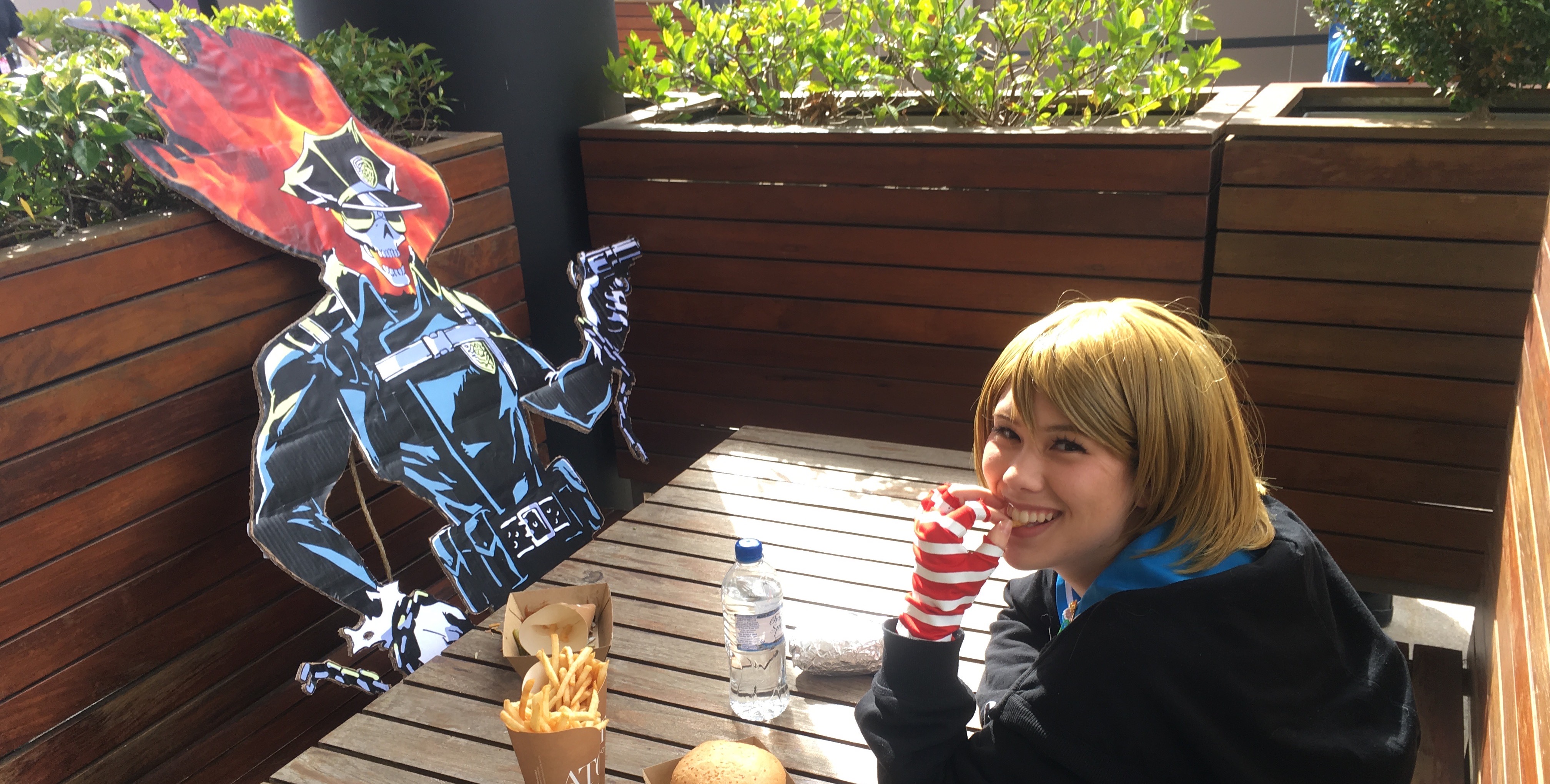
 In order to understand why I did what I did, I have to explain that in the whole anime Inferno Cops limbs do not move. Thats right, he is not animated, when he moves its just a bounce, to turn around, they reflect the artwork. That is a low budget anime, and I made a low budget cosplay out of it.